

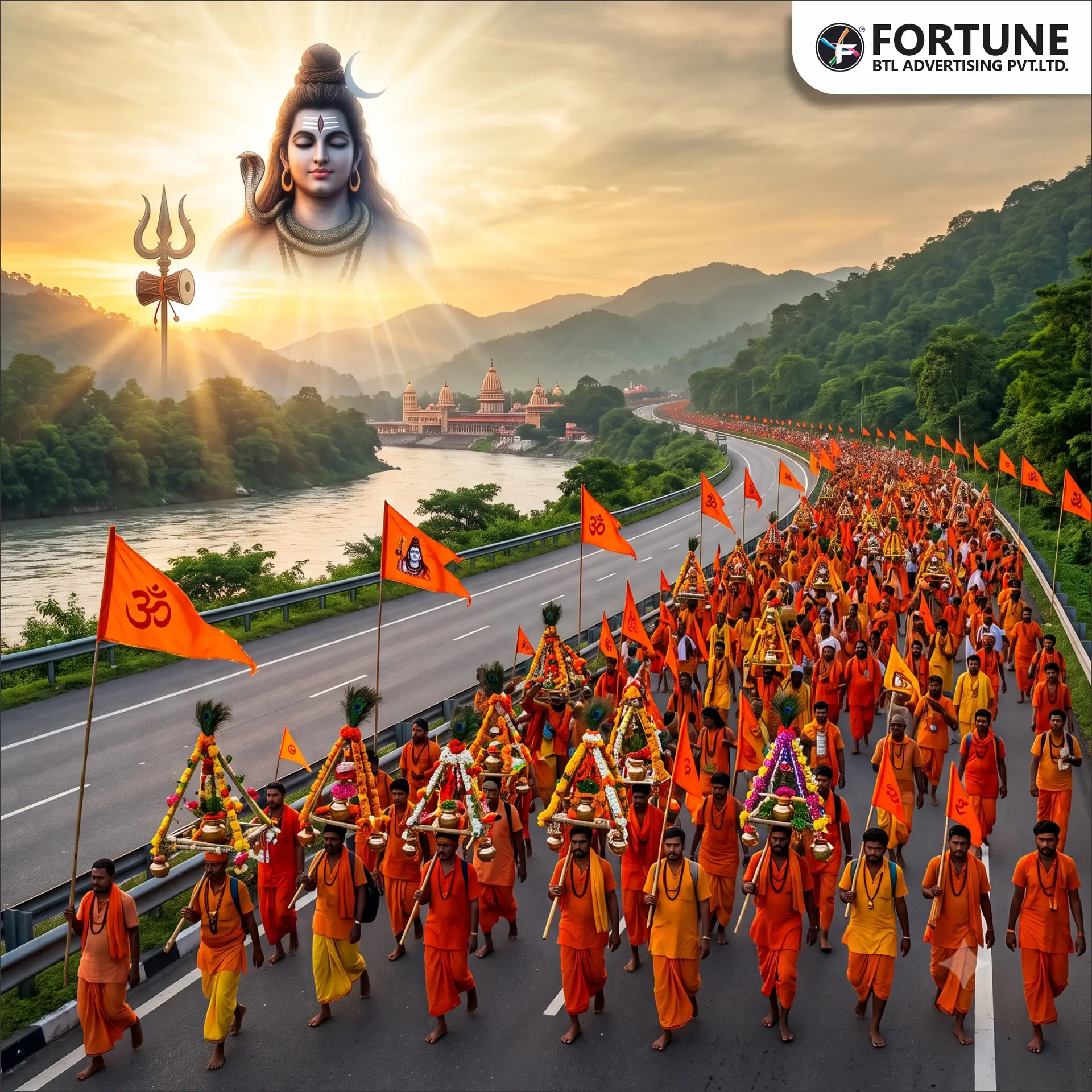
Every year, during the holy month of Sawan, millions of saffron-clad devotees walk across North India carrying holy water on their shoulders. This is the Kanwar Yatra, one of the largest religious gatherings in the world.Most people know it as a pilgrimage to Lord Shiva. But there are many lesser-known facts about Kanwar Yatra that reveal just how rich and layered this tradition really is.
Whether you’re a devotee, a curious traveller, or a student researching Indian festivals, these facts about Kanwar Yatra will give you a fresh look at a pilgrimage that has shaped North Indian culture for centuries.
What is Kanwar Yatra?
Kanwar Yatra is an annual pilgrimage where devotees, called Kanwariyas, travel to holy rivers like the Ganga to collect sacred water. They carry this water back home in decorated containers called “kanwars,” balanced on a bamboo pole across their shoulders.
The journey is dedicated to Lord Shiva. It takes place during Sawan (also called Shravan), a monsoon month considered especially sacred to him. Devotees offer the collected water on Shiva lingams in temples, often on the last Monday of the month.
Before we get into the detailed facts about Kanwar Yatra, it helps to understand this: the yatra blends physical endurance with deep faith. Many Kanwariyas walk hundreds of kilometres, barefoot, chanting “Bol Bam” as they go.
20 Interesting Facts About Kanwar Yatra
1. It Traces Back to the Legend of Samudra Manthan
According to Hindu mythology, when gods and demons churned the ocean in search of Amrit, a deadly poison called Halahal emerged instead. Lord Shiva drank the poison to save the universe, and it turned his throat blue, giving him the name Neelkanth. Devotees pour Ganga water over Shiva idols to recreate the act of soothing his pain.
2. Ravana Is Believed to Be the First Kanwariya
Many legends credit Ravana, a devoted follower of Shiva, as the first person to perform this ritual. He is said to have carried Ganga water in a kanwar to offer to Lord Shiva at Pura in what is now Uttar Pradesh, long before the tradition became widespread.
3. Parshuram’s Vow Also Shaped the Tradition
Another story links the yatra to Parshuram, who vowed to offer Ganga water every Monday to a Shivling he had established. This weekly act of devotion is believed to have inspired the structured pilgrimage practiced today.
4. The Earliest Physical Evidence Dates to the 7th Century
Historians point to a sculpture at Kalinjar Fort in Uttar Pradesh, dated to the 7th or 8th century CE. It shows a figure named Sri Savant carrying a kanwar on his shoulders, making it the oldest known visual proof of this tradition in India.
5. The Word “Kanwar” Comes From the Carrying Pole
The term “kanwar” refers to the bamboo structure devotees use to carry pots of water. It usually has two ends hung from a single pole, balanced across the shoulders, a design that hasn’t changed much in centuries.
6. Sawan Month Is Considered Shiva’s Favourite Time
Shravan, or Sawan, falls during the monsoon and is believed to be the month Lord Shiva loves most. Many Hindus observe fasts, visit temples, and perform special prayers throughout this period, making it a natural time for the Kanwar Yatra.
7. Devotees Follow Strict Personal Discipline
Throughout the journey, Kanwariyas typically avoid non-vegetarian food, alcohol, and other indulgences. Many also maintain celibacy and speak only when necessary, treating the yatra as a period of physical and spiritual purification.
8. “Bol Bam” Is More Than a Chant
Kanwariyas repeat “Bol Bam” throughout their walk, a phrase invoking Lord Shiva. It keeps spirits high during long, tiring stretches and signals to others on the road that a devotee is passing, encouraging mutual respect and space.
9. The Water Cannot Touch the Ground
A key rule of the yatra is that the kanwar must never touch the ground once the water is collected. Devotees plan rest stops carefully, using stands or helpers to hold the kanwar steady during breaks, since setting it down is seen as breaking the vow.
10. Some Kanwariyas Walk Without Stopping
A special category of devotees, known as “Dak Kanwariyas,” travel non-stop from the river to the temple, taking turns carrying the kanwar within their group. This method demands intense physical stamina and is considered a heightened form of devotion.
11. Haridwar, Gaumukh, and Rishikesh Are Major Water Sources
While Haridwar is the most popular starting point, some devotees travel further to Gaumukh, the origin of the Ganga, or gather water at Rishikesh and Sultanganj in Bihar, depending on their region and tradition.
12. Sultanganj Feeds the Famous Baba Baidyanath Route
In Bihar, devotees collect water at Sultanganj and walk over 100 km to Deoghar’s Baidyanath Temple, one of the twelve Jyotirlingas. This route, called the Kanwar path in eastern India, draws massive crowds every Sawan.
13. The Pilgrimage Marks the Seasonal Shift Too
Beyond religious meaning, the Kanwar Yatra traditionally coincides with the end of summer and the arrival of monsoon rains, tying the ritual to the agricultural calendar of the Gangetic plains.
14. Modern Transport Has Changed the Yatra
While walking remains the traditional method, many Kanwariyas now travel by bicycle, motorbike, or decorated trucks. Motorbike groups, often called “Kanwar convoys,” have become common, especially among younger devotees.
15. Some Kanwars Are Elaborately Decorated
Beyond simple bamboo poles, many kanwars today are decorated with flowers, lights, images of deities, and colourful cloth. Some groups even build large, temple-shaped kanwars carried by several people together.
16. Crores of Devotees Now Take Part Each Year
The scale of this pilgrimage has grown enormously. In recent years, official estimates have placed the number of participants in Haridwar alone in the crores, making it one of the largest annual religious gatherings anywhere in the world.
17. Local Communities Set Up Free Support Camps
Along every major route, volunteers and local organisations set up free food stalls, water points, and rest camps for Kanwariyas. This spirit of community support is considered as much a part of the tradition as the walk itself.
18. Water Is Offered on the Last Monday of Sawan
Most devotees aim to complete their journey and offer the collected water by the final Monday of Shravan, known as Shravan Somvar. This day holds special importance for Shiva devotees across India.
19. The Yatra Has Regional Variations
While the Delhi-Haridwar route is the most well-known, similar Kanwar traditions exist across states like Bihar, Jharkhand, and West Bengal, each with its own local practices, preferred temples, and travel customs.
20. It Reflects a Living, Evolving Tradition
Despite its ancient roots, the Kanwar Yatra continues to change with each generation, adopting new modes of travel, new safety measures, and new forms of community support, while its spiritual core remains untouched.
Why These Facts About Kanwar Yatra Make It Unique
Taken together, these facts about Kanwar Yatra show why it is more than just a religious walk. It carries centuries of mythology, from Samudra Manthan to Ravana and Parshuram, while still adapting to modern life through new modes of travel and support systems.
The devotion of Kanwariyas, their discipline, endurance, and community spirit, turns a physical journey into a deeply spiritual one. Few pilgrimages combine history, faith, and sheer scale quite like this one does.
It’s this blend of the ancient and the ever-changing, reflected in every one of these facts about Kanwar Yatra, that keeps the tradition relevant and remarkable, year after year.
Frequently Asked Questions About Kanwar Yatra
1. What are some interesting facts about Kanwar Yatra? Some fascinating facts about Kanwar Yatra include its mythological link to Samudra Manthan, its earliest physical evidence at Kalinjar Fort from the 7th century, and the strict rule that the kanwar must never touch the ground.
2. What is the main significance of Kanwar Yatra? The Kanwar Yatra honours Lord Shiva by offering him sacred Ganga water, recreating the mythological act of soothing him after he consumed poison during Samudra Manthan.
3. Why is Kanwar Yatra celebrated during Sawan? Sawan, or Shravan, is considered Lord Shiva’s favourite month. Devotees believe prayers and rituals performed during this time bring special blessings.
4. Who are Kanwariyas? Kanwariyas are devotees who undertake the Kanwar Yatra, carrying holy water in a kanwar from a sacred river to a Shiva temple, usually dressed in saffron clothing.
5. Where do most Kanwar Yatra pilgrims collect water? Haridwar is the most popular source, though many also travel to Gaumukh, Rishikesh, and Sultanganj depending on their region and the temple they plan to visit.
Brand Activation During Kanwar Yatra
With crores of devotees walking the route every Sawan, the Kanwar Yatra has also become a major opportunity for brands to connect with a massive, highly engaged, on-ground audience. Fortune BTL Advertising Pvt. Ltd. specializes in exactly this kind of mela and event activation, helping brands reach Kanwariyas and local communities along the route through retail branding, van activation, wall painting, and dedicated campaigns built around the scale and spirit of the yatra.
Conclusion
These 20 facts about Kanwar Yatra show a pilgrimage built on centuries of mythology, discipline, and community devotion. From its roots in ancient legends to its massive scale today, every fact about Kanwar Yatra adds another layer to a tradition that continues to inspire millions.
If you found these facts about Kanwar Yatra interesting, share this article with others who’d love to learn more about India’s rich spiritual traditions. There’s always more to discover about the festivals that shape the country’s living culture.