

What is BTL Marketing? A Complete Guide for Businesses.
In todays business world companies are always looking for ways to talk to the people they want to sell to. Even though online ads and TV commercials are still important Below-the-Line Marketing is a good way to get customers to care about a brand and to get results that you can measure.
This kind of marketing is different from ads that lots of people see. Below-the-Line Marketing is about talking to potential customers and giving them special experiences that they will remember. For example if a company is launching a product or having a sale in a store or putting on an event or going on a road trip to meet customers or going to rural areas to meet people Below-the-Line Marketing helps companies create experiences that people will talk about and that will make them want to buy something.
In this guide we will tell you everything you need to know about Below-the-Line Marketing. We will talk about what it’s what is good about it the different kinds of Below-the-Line Marketing and examples of how it works. We will also explain why Below-the-Line Marketing is still a tool, for companies of all sizes to sell their products and services.
What is BTL Marketing?
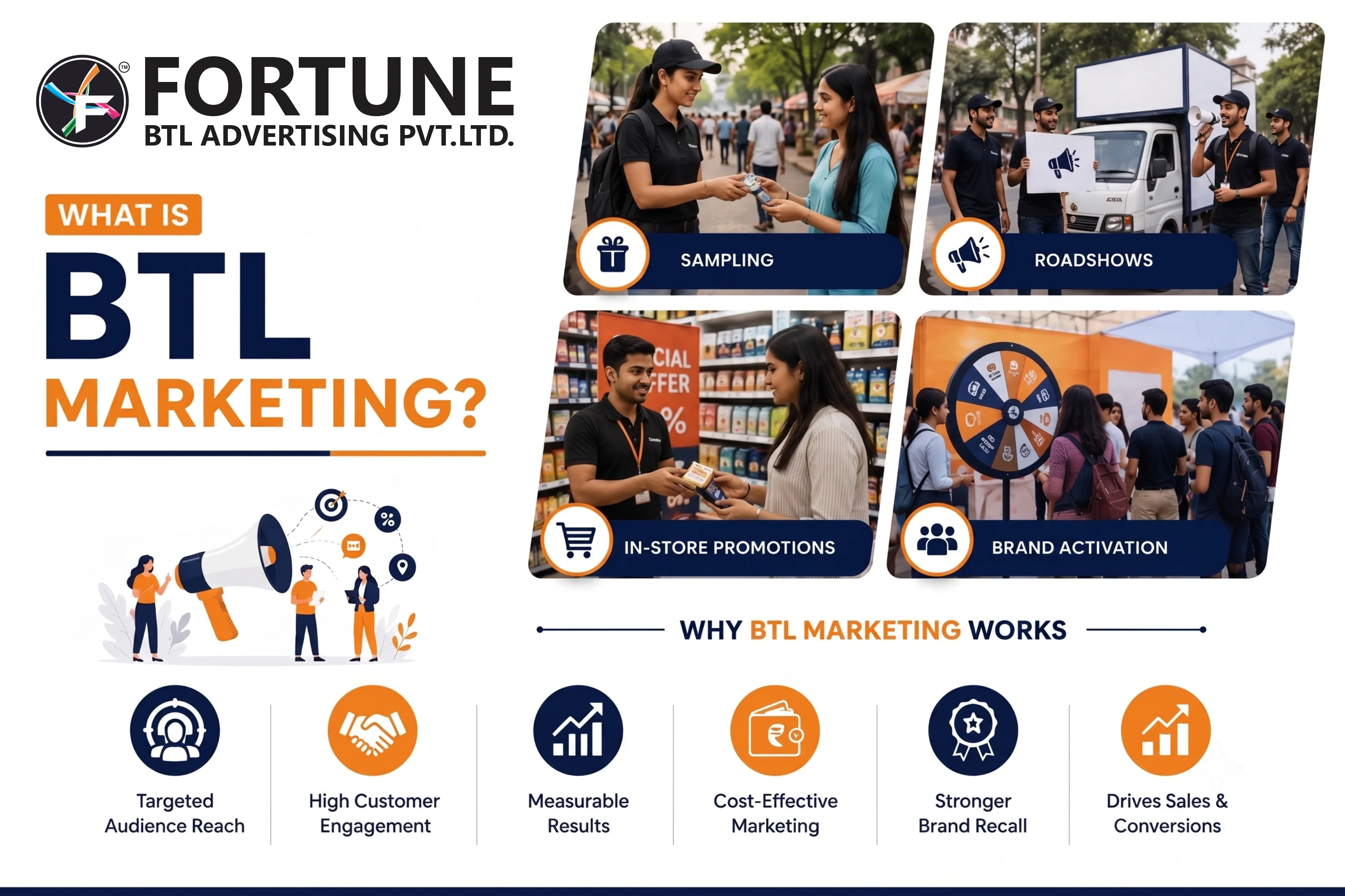
BTL (Below-the-Line) Marketing is a marketing approach that focuses on directly engaging a specific target audience through personalized and interactive promotional activities. Instead of reaching millions through television or newspapers, BTL marketing aims to build stronger customer relationships through face-to-face interactions and targeted campaigns.
The primary objective of BTL marketing is to generate brand awareness, encourage customer participation, increase product trials, and drive sales.
Common BTL marketing activities include:
- Brand Activation
- Retail Branding
- Product Sampling
- Roadshows
- Exhibition Marketing
- Trade Shows
- Mall Activations
- College Activations
- Rural Marketing Campaigns
- Outdoor Promotions
- Corporate Events
- Promotional Kiosks
These activities allow customers to experience a brand firsthand, making the marketing message more impactful and memorable.
Why is BTL Marketing Important?
Consumers today expect more than just advertisements—they want experiences. BTL marketing bridges this gap by creating meaningful interactions between brands and customers.
Here are some reasons why businesses continue to invest in BTL marketing:
1. Direct Customer Engagement
BTL marketing allows brands to interact directly with potential customers. This personal connection builds trust and makes customers more likely to remember the brand.
2. Better Brand Recall
People are more likely to remember a brand they have experienced in person than one they only saw in an advertisement.
3. Highly Targeted Campaigns
BTL campaigns can be customized for specific cities, customer groups, age segments, or industries, making them highly effective.
4. Improved Return on Investment (ROI)
Because campaigns target the right audience, businesses often achieve higher conversion rates and better returns compared to mass advertising.
5. Immediate Customer Feedback
Brands can gather real-time feedback, understand customer preferences, and improve their products or services accordingly.
Types of BTL Marketing Activities
Brand Activation
Brand activation focuses on creating memorable experiences that encourage customers to interact with a brand. Activities may include live demonstrations, promotional events, contests, and experiential marketing campaigns.
Retail Branding
Retail branding enhances the appearance of stores using signboards, display units, promotional materials, and visual merchandising to attract customers and improve shopping experiences.
Product Sampling
Giving customers free product samples allows them to experience the product before making a purchase decision. This strategy is especially effective for FMCG, food, beverages, and personal care products.
Exhibition Marketing
Trade shows and exhibitions provide businesses with opportunities to showcase products, generate qualified leads, and build relationships with potential clients and distributors.
Rural Marketing
India’s rural market offers enormous growth opportunities. Rural marketing campaigns help brands reach consumers through village activations, local events, mobile vans, and community engagement.
Roadshows and Van Activations
Roadshows use branded vehicles to promote products across different locations, making them ideal for product launches, awareness campaigns, and regional promotions.
Mall and College Activations
Shopping malls and educational institutions are excellent venues for engaging customers through interactive games, product demonstrations, sampling, and promotional activities.
Real World Examples of Below The Line Marketing
Here are some examples of Below The Line marketing that really work:
Retail Promotion: A supermarket gives out free food samples and does live cooking demonstrations to get people to try a Below The Line marketing product.
Exhibition Participation: A tech company shows off its products at a trade to get business leads for the company.
Roadshow Campaign: A drinks company goes to cities with branded vans and gives out samples and talks to people about the drinks company products.
Rural Activation: A farming brand has meetings in villages and does live demonstrations to teach farmers about the farming brand solutions.
Mall Activation: A lifestyle brand creates a fun zone, in a mall where people can try the lifestyle brand products and join contests to win prizes from the lifestyle brand.
These Below The Line marketing campaigns make customers remember the Below The Line marketing brand and also help the business of the Below The Line marketing company grow.
Frequently Asked Questions
What does BTL stand for in marketing?
BTL stands for Below-the-Line Marketing, a strategy focused on direct and targeted customer engagement through activities such as brand activations, exhibitions, retail promotions, and experiential campaigns.
Is BTL marketing suitable for small businesses?
Yes. BTL marketing is highly flexible and can be scaled according to budget, making it an excellent option for startups, SMEs, and large enterprises alike.
What is the difference between ATL and BTL marketing?
ATL marketing uses mass media to reach a broad audience, while BTL marketing focuses on personalized interactions with specific customer groups through targeted campaigns.
What are examples of BTL marketing?
Examples include product sampling, retail branding, exhibition stalls, roadshows, mall activations, college activations, rural marketing campaigns, and promotional events.
Which industries benefit the most from BTL marketing?
Industries such as FMCG, retail, healthcare, education, real estate, automobiles, consumer electronics, banking, and agriculture can all achieve strong results through BTL marketing campaigns.
Conclusion
Below the line marketing is a good way for companies to talk to customers and make them trust the company. It is also a way to make the company grow in a way that we can measure. Even though advertising on the internet is important doing things in the world creates experiences that people will remember for a long time.
There are a lot of things that below the line marketing can do for companies. For example it can help with making the brand well known in stores and at events. It can also help with exhibitions and events in areas and other promotional events. All of these things give companies a lot of chances to talk to the people who might want to buy their products in a way that’s meaningful.
If you want to get more people to pay attention to your company and make your brand well known and if you want to make more money from the money you spend on marketing then you should think about using below the line marketing.
A well planned below the line marketing campaign will make your brand stronger. Help you build good relationships, with customers that will help your company do well for a long time.